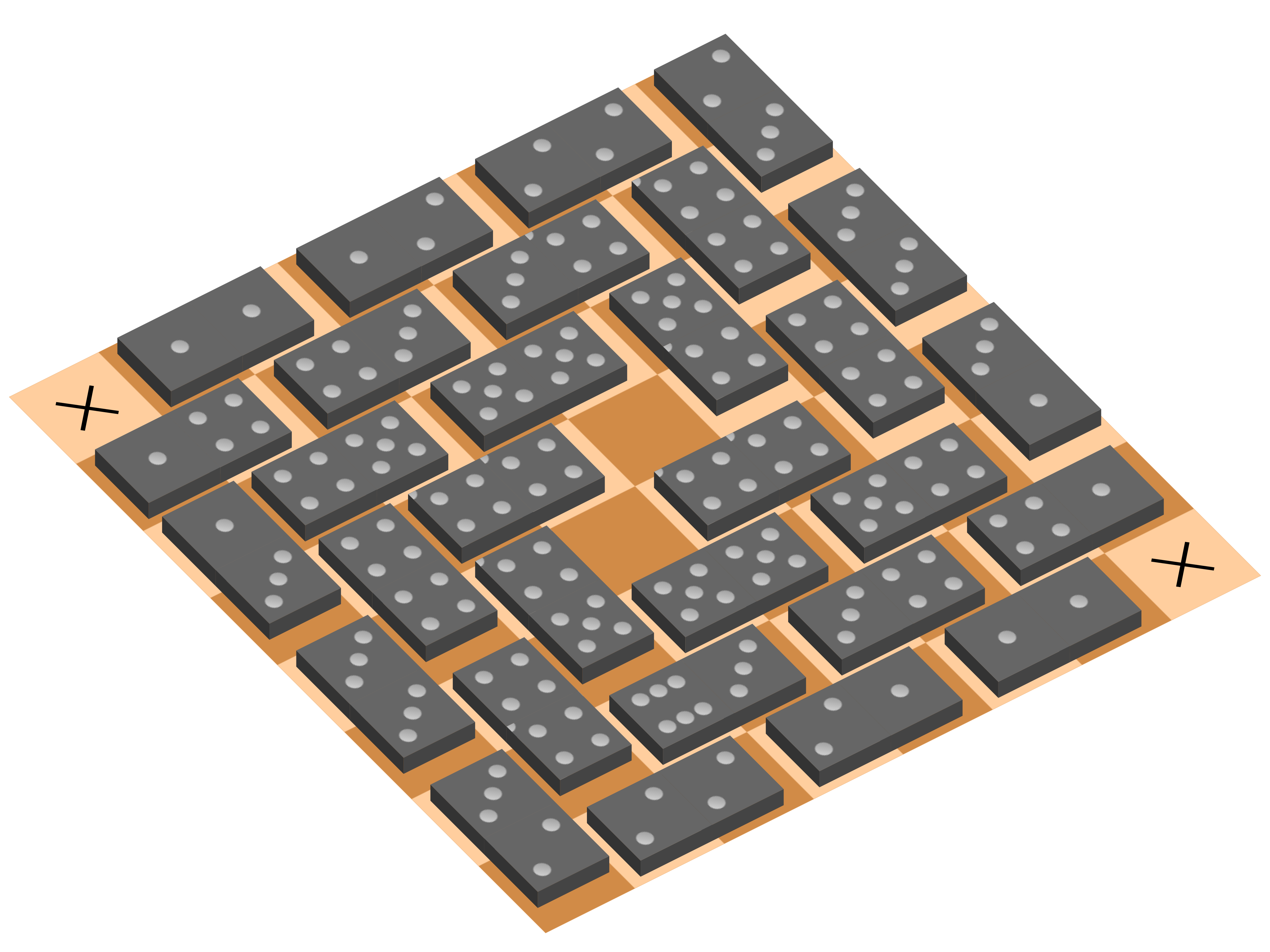
Sometimes the chessboard’s two colors aren’t enough to prove a tiling is impossible. When every legal move covers an even split of black and white, parity says nothing useful. The fix: use 3 or 4 colors instead. Each move now has a fixed footprint, and you can count whether the starting board’s footprint matches the goal’s. We’ll use 4 colors to crack a tetromino-tiling problem.
✓ Intro · expand
Try first (productive failure)
Before the worked example: spend 60 seconds taking your best shot at this.
A guess is fine — being briefly wrong about a problem makes the explanation
land harder when you read it. This appears once per tutorial; skip
if you already know the trick.
60s
✓ Try first · expand
Worked example
Can a 10×10 board be tiled by 25 straight 1×4 tetrominoes (each tile covers four cells in a single row or single column)? Answer 1 for yes, 0 for no.
✓ Worked example · expand
Practice 1 of 3Type a fraction, decimal, or expression.
✓ Practice · expand
Reflection
When does a problem demand <em>more</em> than two colors? In your own words, what’s the cue that tells you parity will be silent and you should escalate to mod-3 or mod-4 — and how do you decide which $k$ to try first?